Back to: Linking to Care, Point of Care Testing (POCT). Aotearoa Edition
This may be a challenging section. Health Network Collective aims to bring formalized skills and a supportive systemized approach for our non-regulated workforce in navigating pathways to cure in our community. Our focus is marginalized, low socio-economic, ethnic and general populations, supplementing existing health structures and systems. This broad statement lends itself to kaiawhina peers and support persons often working with wai ora, person seeking health, in challenging environments.
Further to this, our environments and wai ora are often in a position of perceived (if not real) stigmatization and social prejudice. The interaction we are undertaking with Health Network Collective HCV testing and education may be the first step for our wai ora in de-stigmatizing health and creating a gateway to further health access and availability. We need to get this right.
At no time and under no circumstance is any compromise on clinical procedure allowable, ethical or medically safe. The clinical pathway and process must be adhered to or we are at risk of contamination and subsequent infection leading to significant health risk and professional compromise. This could add to stigma’s and further isolate wai ora from seeking health access and support. That would be very bad.
As an example, we could look to an ambulance vs hospital accident and emergency department response to the same condition or injury. Clinically very similar, if not same, procedures and process are followed. This is not only clinical; it is encompassing Infection Prevention and Control. What is different is the hospital-based staff are working on wai ora on a bed in a controlled clinical environment. Our ambulance heroes are often on their knees, crawling to wai ora through spaces made safe by fire and rescue heroes, or in unsanitary unclean locations in poor lighting with little support. Risk reduction and mitigation in terms of Infection Prevention and Control and clinical procedure does not get compromised.
In an ideal world we will have access to a clinic type facility with a controlled environment. Our basic hygiene and Infection Prevention and Control principles apply as always, and are relatively simple to maintain. All surfaces are cleaned at least daily, rubbish and waste removal is conducted frequently and our set wai ora treatment and testing area is easily cleanable in between wai ora or any use. Mild disinfectant solutions, made in accordance with the manufacturer’s instructions as written on the container, are best for full and complete cleaning of the room and wipe down of surfaces where wai ora interaction occurs. Medical professionals at diploma and degree level can spend weeks if not months on this area of learning alone, with annual revisions of basic principles. For us let’s consider all surfaces are cleaned frequently and all the factors we discussed in basic hygiene are used and adhered to. As best as we possibly can.
Working Surface(s)
In our ideal world we will have in our well-ventilated clean controlled work environment we can clean and wipe down daily and between wai ora interactions, the following as a minimum standard:
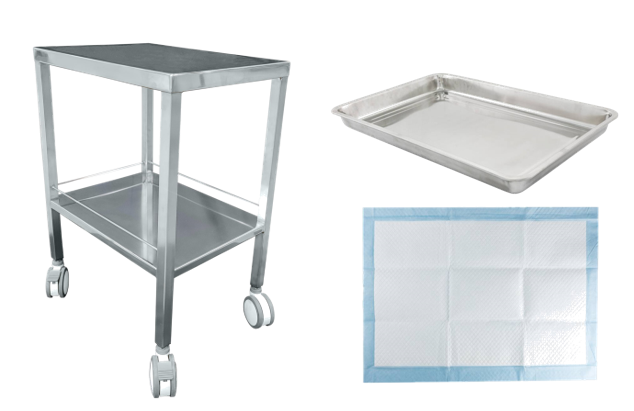
- A surgical/stainless steel wheeled trolley for equipment
- Top shelf clean area
- Lower shelf possibly sharps container and cleaning wipes, gloves, masks and
- A desk height non-porous surface that we can place absorbent hospital pads on (at minimum paper towels) to create a disposable work surface. Where this disposal pad is not available a non-porous surface (as an example glass or stainless steel that is easily and efficiently cleanable) is suffice as a work surface.
Field based testing
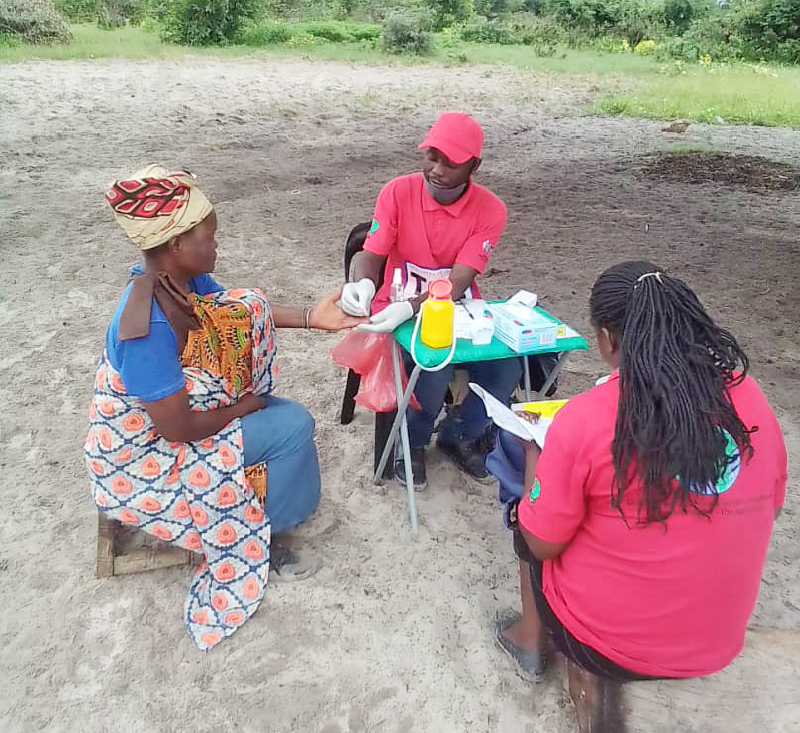
Like our ambulance and first responder hero’s, there may be occasion when you need to test in less-than-ideal environments. Whenever and wherever possible we must respect wai ora privacy and medical in confidence, this may be via social distancing policy or creating barriers such as a waiting point. In this case our work surface is considered clean, sharps and contaminated items go from work surface, to wai ora, to waste disposal. Our procedure for testing that we cover in a following lesson does not change.
In field-based situations Health Network Collective would strongly encourage you to seek a partnership or collaboration with a local health professional. This can give you an opportunity to develop best practice relevant to the environments you will be working in. That’s an education and partnership process that you can then share and develop with your community.
Summary: You may have identified that our POCT settings & environment captures elements of all the lessons we have covered so far, with an emphasis on Infection Prevention and Control. Reaching out for advice from your community is not only creating the partnerships and collaborations we want and need, it is contributing to the wellness of us, our wai ora and our communities.