Back to: Linking to Care, Point of Care Testing (POCT). Aotearoa Edition
Now that we have learnt of the 5 moments for hand hygiene, let’s look at what is involved in hand hygiene.
Keeping our hands clean is one of the most important things we can do to help avoid becoming unwell and spreading germs to others. A lot of disease and illness is spread by not washing our hands. This lesson is based on science, backed by studies, research and effectiveness measured by many case studies. This lesson and the remainder of lessons in Section 4, Basic Hygiene, will provide links and further reading for your interest and learning.
The best form of hand hygiene is the good old tried and true soap and water hand washing. One of the key components of adequate hand washing is the friction created by rubbing or washing the hands, this can greatly assist in getting the result we need. Alcohol and other types of hand sanitizers are acceptable however not as efficient as using soap and water. The really important thing is that we are prepared that we can perform some form of hand hygiene wherever we are under any circumstance.
Our daily personal hygiene shouldn’t be overlooked, keeping nails trimmed and tidy, using a nail brush to clean out behind our nails and keeping our hands generally clean and tidy should be a part of our daily routines.
If you have anything presenting as dermatitis, legions, allergic skin reactions or similar on your hands seek medical advice and minimize any contacts with wai ora. Gloves may be a consideration in this instance and recommended if you are not able to minimize contact with your wai ora. We will discuss gloves in a following lesson.
Any cuts abrasions burns or broken skin on your arms or hands will need to be cleansed regularly and have appropriate dressings or coverings at all times you are around wai ora or in a clinical environment.
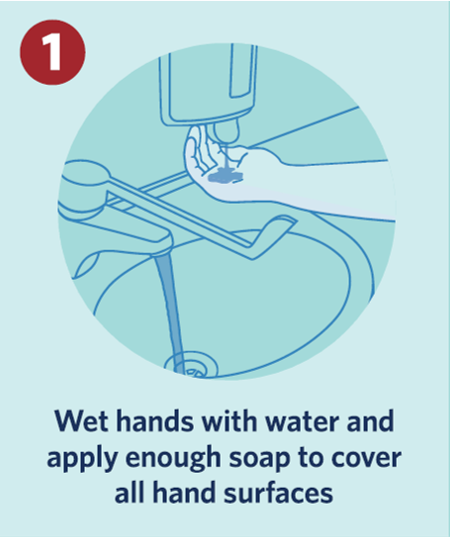
Handwashing, first steps.
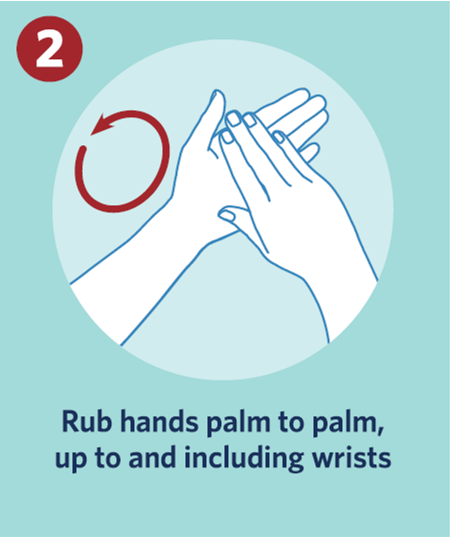
- Once all your hand and wrist surfaces are covered in soap, rub your hands in a circular motion palm to palm including the wrists.
- The friction your causing with the rubbing motion is an important part of ridding and destroying any microbes and nasties that may (or may not) be present.
- Make sure the surfaces of your fingers get a decent ‘rub’ as well, all the inside or palmer aspects of the hand and wrist.
- If you wish to be really thorough include the forearms.
- In the case of visible dirt, notably around the finger nails, feel free to use a scrubbing brush to get in around and under the nails, carefully.
- Once all your hand and wrist surfaces are covered in soap, rub your hands in a circular motion palm to palm including the wrists.
- The friction you’re causing with the rubbing motion is an important part of ridding and destroying any microbes and nasties that may (or may not) be present.
- Make sure the surfaces of your fingers get a decent ‘rub’ as well, all the inside or palmer aspects of the hand and wrist.
- If you wish to be really thorough include the forearms.
- In the case of visible dirt, notably around the finger nails, feel free to use a scrubbing brush to get in around and under the nails, carefully.
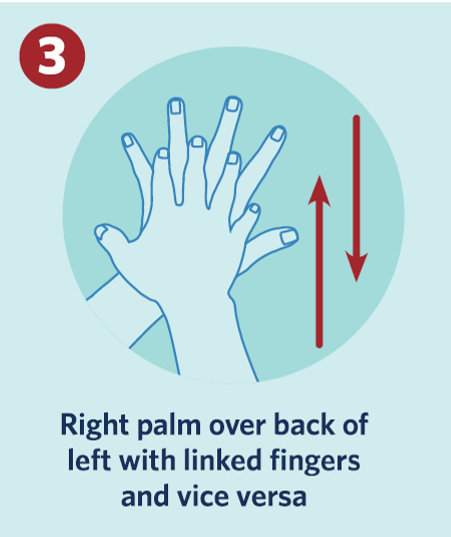
- Next use the right palm over the back of the left hand.
- Link your fingers of the left hand into the fingers of the right hand with a consistent rubbing motion.
- Half time change sides and do it all again, left over right.
- If you get lost just do it again.
- Now rub palm to palm with the fingers inter linked.
- Swap you thumbs so left is over right then right over left.
- Rub rub rub, with some circular motion.
- With a little practice you will develop an instinctive routine in no time.
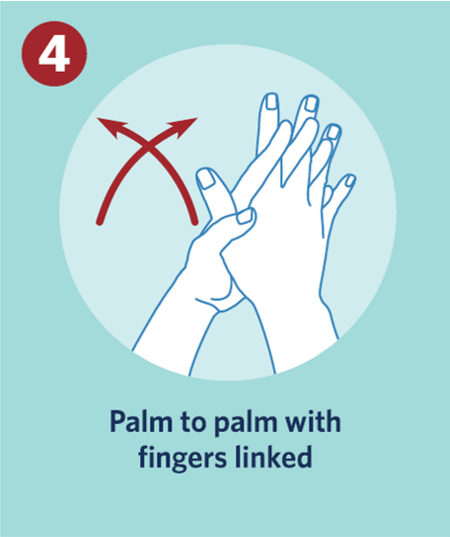
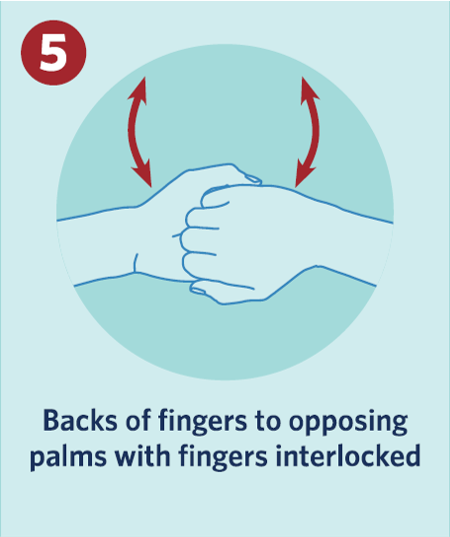
- And like the image shows, back of fingers interlocked into the opposing palms and wash or rub with an up and down semicircular motion.
- Swap over and do the same again.
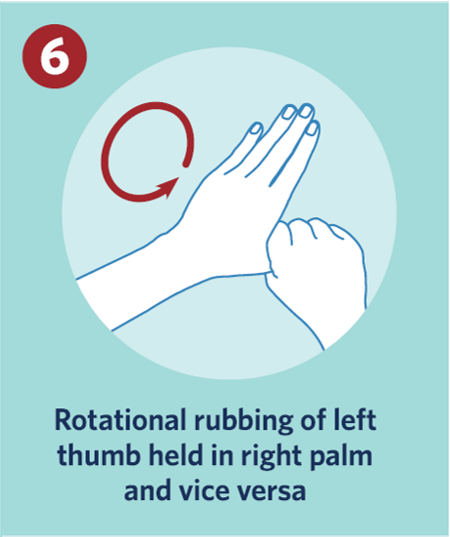
- Nearly there, take your thumb in the palm of the opposite hand and give it a goof rub and wash with a circular motion.
- Swap over and same again on the other thumb
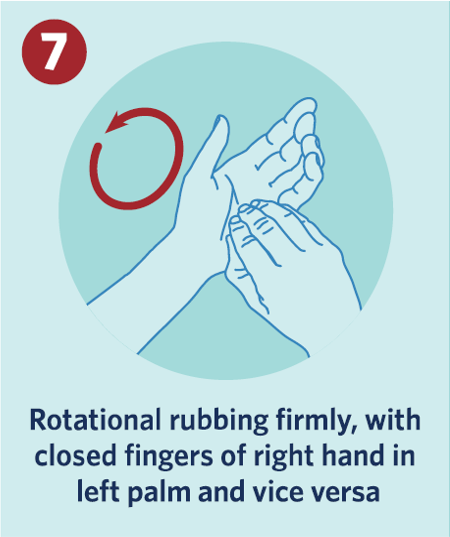
- Second to last, or the final rub, use the fingers of one hand to rub and wash the palm of the opposite hand.
- Open and close the palm of the hand you’re rubbing to get into all those crevices and places.
- And swap and same again on the other hand.
- This will also to some extent help with cleaning your nails.
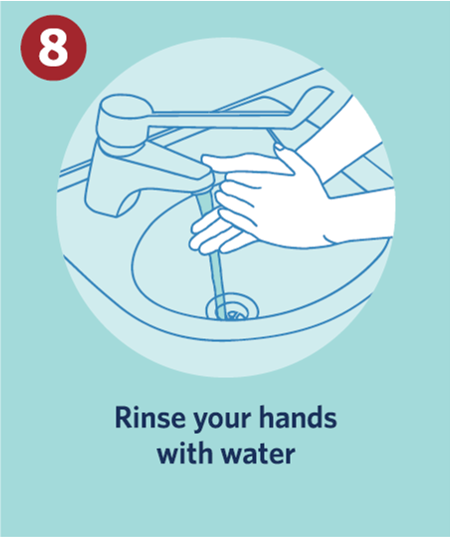
- Now give your hands a good rinse under running water (where possible) to rinse of the soap.
- Make sure you basically rinse similar to the steps you just took in the previous steps, not as thorough we just want to make sure we have rinsed off all the soap and any dirt or nasties.
- Shake of excess water once done.
- For a pedantic professional look use your elbows to turn off the water, that is assuming the sink has lever type taps to enable using your elbows.
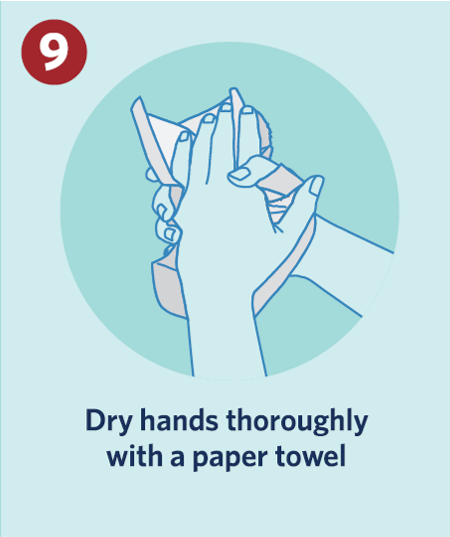
- And finally dry.
- Dispose of the paper towels in the rubbish by dropping them into the bin, just washed the hands so avoid touching rubbish bins or disposal points, that’s essentially contamination and you will need to repeat the complete procedure again.
- No short cuts.
Now you’ve mastered the fine art of hand washing, your next task is to go and complete this at least 5 times, right now. And then start to make this your standard of hand washing every time you wash your hands. Even better; start to think of the 5 moments for hand hygiene and apply them, with good hand washing technique, into your daily routines.
And even better, teach the whanua (family) and friends. Good hand washing is a simple activity that can minimize and even prevent some un-wellness and contamination risk.
Finally, print or redraw the attached downloadable course material “How to hand wash” from Te Tāhū Hauora, the Health Quality & Safety Commission of New Zealand, and place it next to the 5 moments for hand hygiene poster from you previous lesson as a visible reminder and another opportunity for education for anyone who reads it. Click here for some really awesome quality information and education materials on hand hygiene from Te Tāhū Hauora.