Back to: Linking to Care, Point of Care Testing (POCT). Aotearoa Edition
Like mask wearing and use, there is a lot of differing points of view on gloves and appropriate use. Like all our actions and recommendations Health Network Collective bases learnings on qualified sources and where possible based on research and evidenced practice. A WHO “Glove Use” information leaflet has messaging that glove use in itself helps keep your hands clean and reduces the risk of contamination, or exposure to microbes that can make you sick. Importantly, use and wearing of gloves is a component of good hygiene practice and a part of our 5 moments for hand hygiene in conjunction with good hand washing technique.
So why wear gloves: as we stated above, glove use is part of a systemized approach to infection prevention and control, with our 5 moments of hand hygiene and good hand washing technique. Gloves do not provide complete protection against hand contamination, they do contribute to providing barriers and reducing risk. We should always wear gloves when;
- there is a risk of touching or being exposed to, even if wai ora appear healthy and infection free
- bodily fluids
- bodily tissues
- mucous membranes
- broken skin of any form
- there is a risk, or you do have
- broken skin, this includes nail bed and surround damage
- cracks in your hands from dry skin
- dermatitis or any skin condition
- in all these cases hand washing prior to putting on gloves is very important, and ensure any broken skin or wounds are well cleansed and covered with a waterproof adhesive dressing prior to gloving up.
Types of medical gloves:
- Nitrile non-sterile gloves are designed for adherence to standard transmission-based procedures. For use with activities where hands are possibly going to have contact with blood, body fluids or other potentially infectious materials. Standard Precautions.
- Vinyl non-sterile gloves are for when providing direct patient cares or contact with the patient’s immediate environment, including for wai ora requiring contact isolation. Contact Precautions.
- Latex non-sterile gloves have the same standards as Nitrile Non-sterile gloves. NOTE: do not use latex gloves if you or wai ora have latex allergy.
- Surgical Sterile gloves are used for aseptic sterile procedures and require specialist training in hand hygiene and procedure for use. This isn’t only about glove use, the training extends to level of practice and procedures this type of glove is required for. These gloves are also expensive and most likely will not be readily available.
- Polyethylene or plastic gloves are designed for food grade use only, preparing or handling food. These are not for patient contact.
To put on your gloves, watch the following video on how to put on your non-sterile medical gloves, and then we will discuss in more detail.
- Ensure you have the appropriate glove for the task at hand.
- Check you have the right size of glove
- Following our 5 moments of hand hygiene and best practice, thoroughly wash and dry your hands
- Simply pull gloves onto your hands, and ensure the fingers are well fitted and cuffs over the wrist where possible.
Removal, or ‘Doffing’ of gloves: you will have seen in the previous video how to remove your gloves, let’s go through step by step. Remember your gloves once worn need to be treated as contaminated.
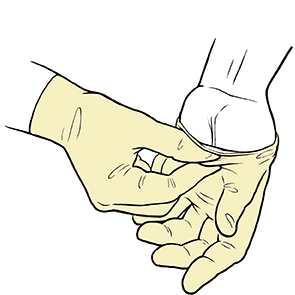
- To remove your gloves minimizing the risk of contamination, never touch your skin with the outside surface of the glove. This is regardless of use or contaminated or not, always assume that once gloves are worn, they are contaminated.
- Grasp the outside of one glove near your wrist with thumb and fore finger of the other hand.
- Carefully pull the glove off, turning it inside out as you roll the glove off the hand.
- Hold the rolled off glove in the palm of your still gloved other hand.
- Slip two fingers from your ungloved hand under the wrist of the remaining glove.
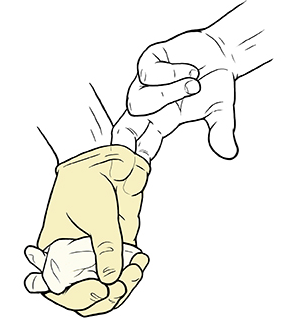
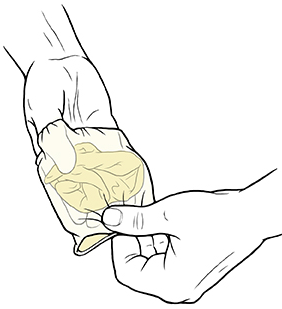
- Pull the glove off allowing the glove to turn inside out as it comes off.
- The first glove you removed should end up inside the glove you are removing, or have just pulled off.
- Dispose of the gloves immediately, and safely.
- We will discuss disposal of Personal Protective Equipment (PPE) in more detail in the following lesson.
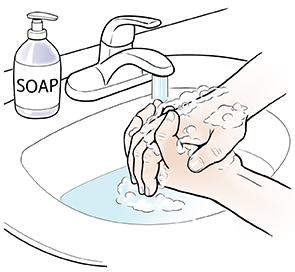
- Wash your hand thoroughly, take your time and ensure you include your wrists with the hand wash.
- Ensure your hand wash is immediately following disposal of your gloves, and before touching any surfaces objects or persons.
- Gloves can have holes that are too small for us to see. These holes can allow microbes to pass through to the skin
In Summary if in doubt, wear gloves. We don’t need to make a big deal or show of our infection prevention and control procedures, and making this a casual appearing act whilst conversing with our wai ora can often help in reducing stigma and making our wai ora more comfortable. Very importantly use of gloves is a part of a systemized approach to infection prevention and control.
Please download these sections course materials, again they are useful reminders for us and good materials for incidental education opportunities for our wai ora and community.
When you can, find some gloves and practice.