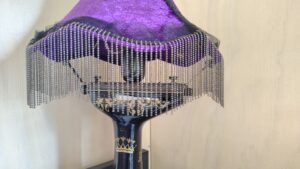
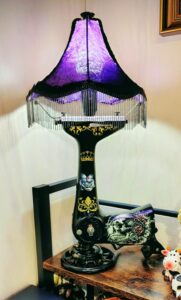
Falling in Reverse, the lamp
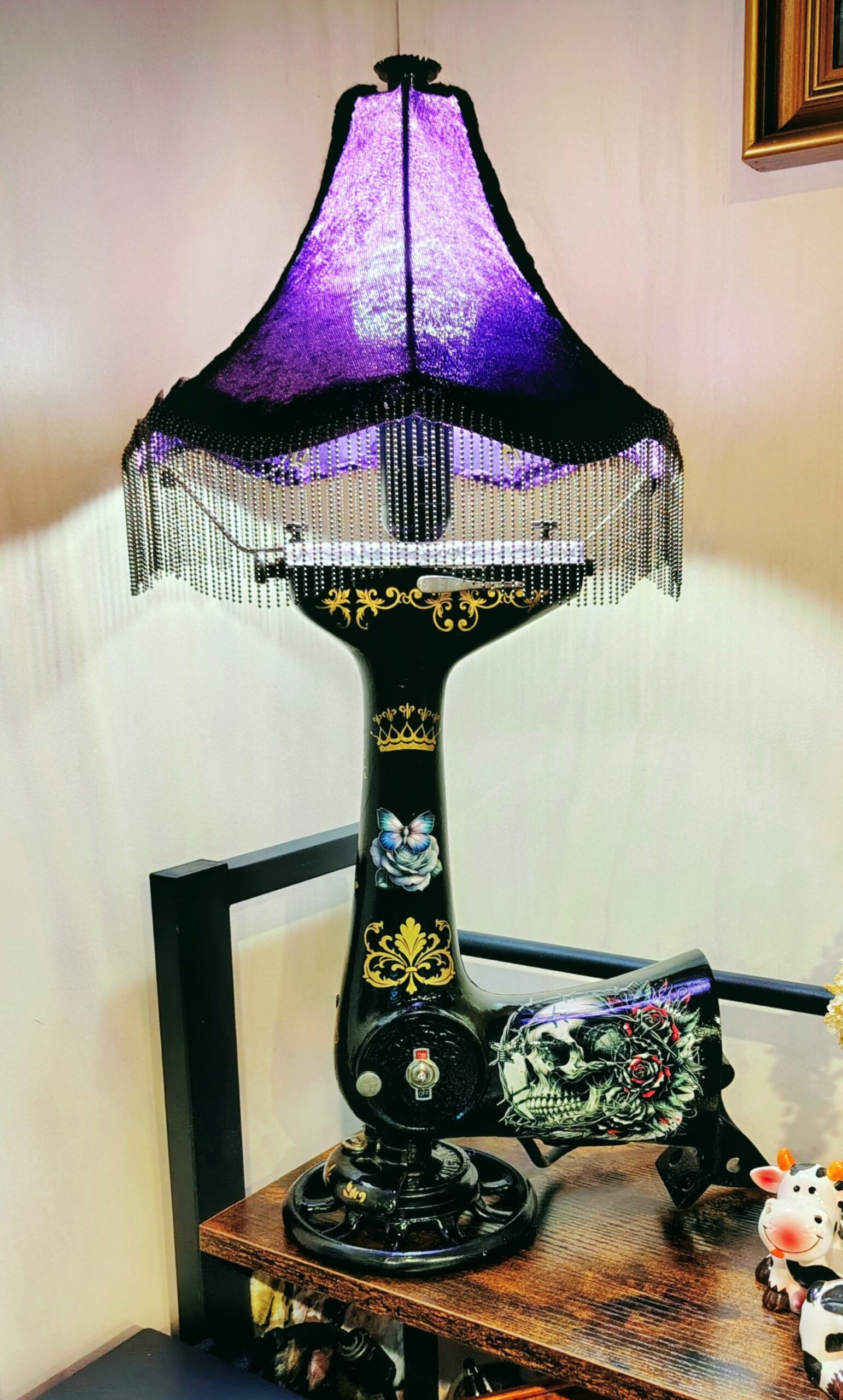
Falling in Reverse, hand sewn shade
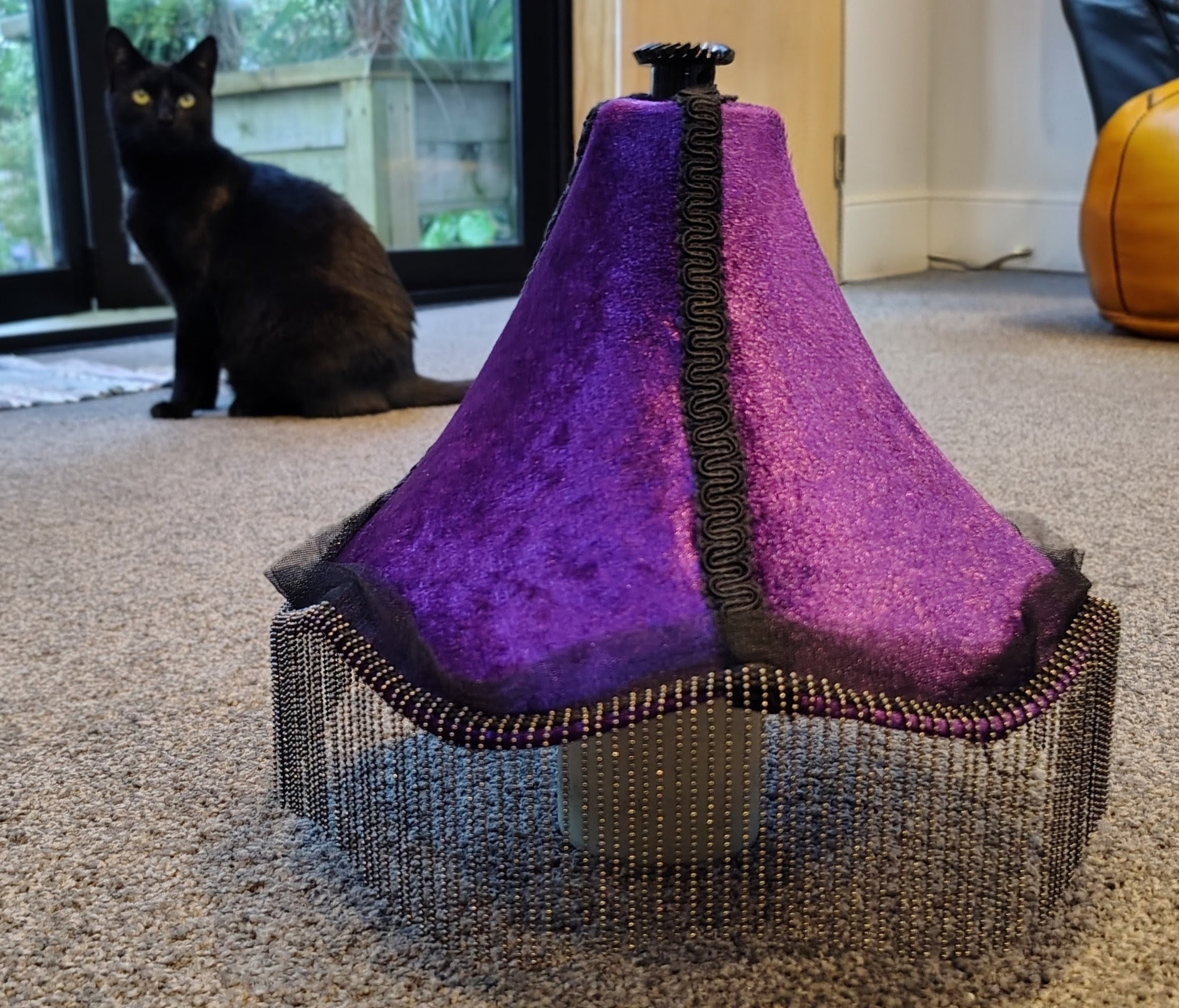
Falling in Reverse, shade in place
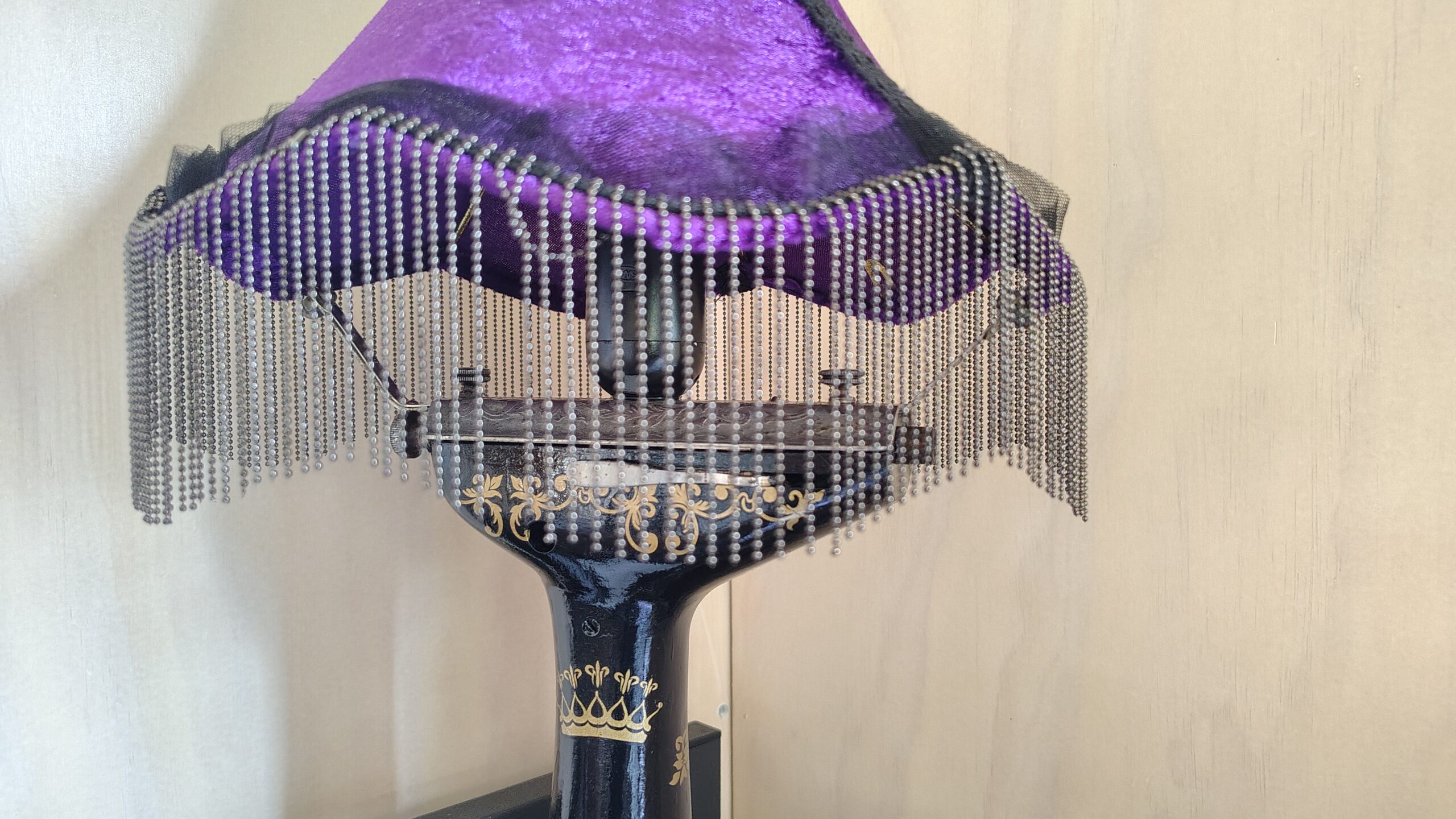
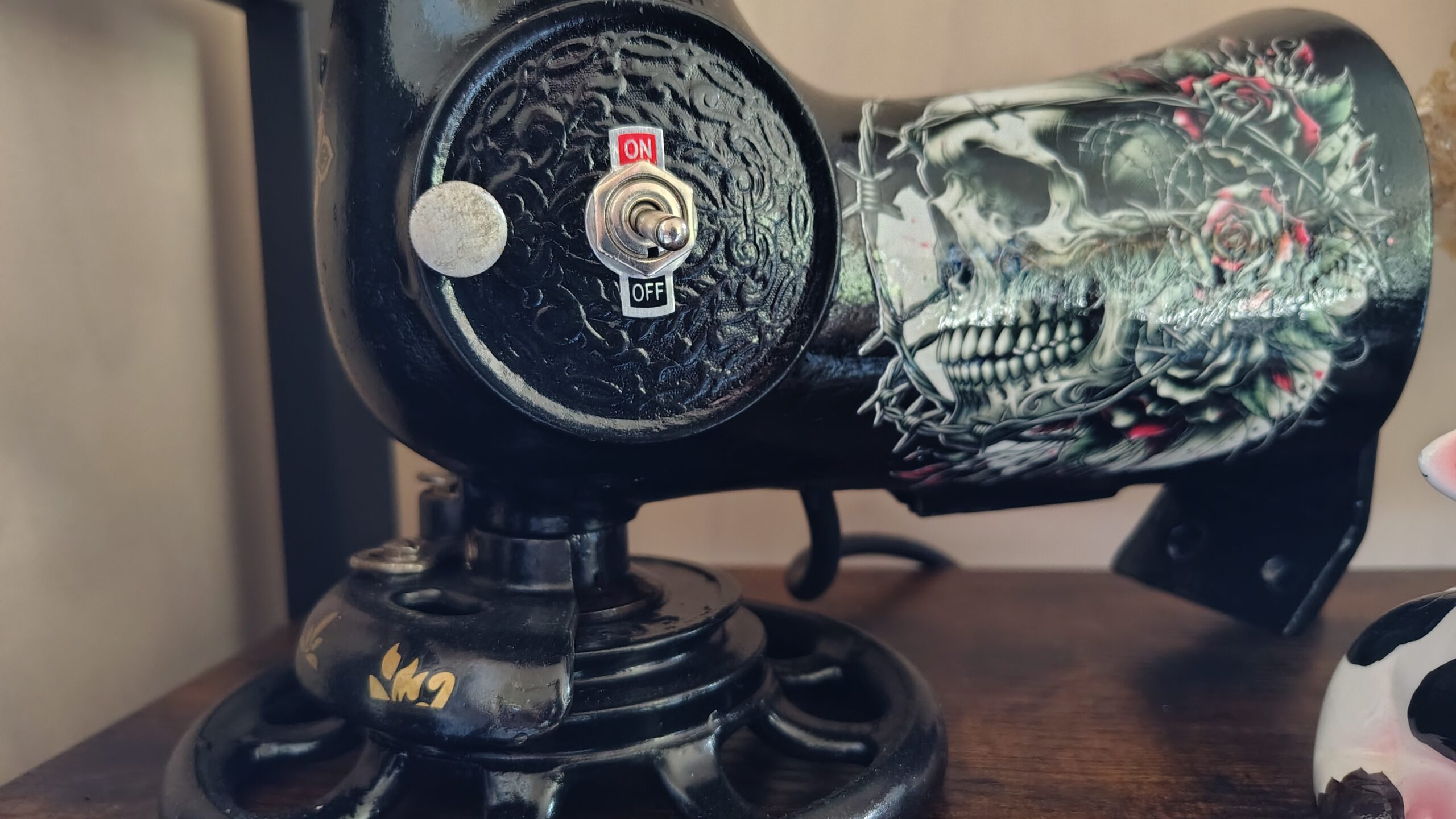
Falling in Reverse, Goth art
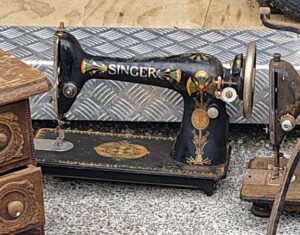
Falling in Reverse before reimagining
Falling in Reverse logo
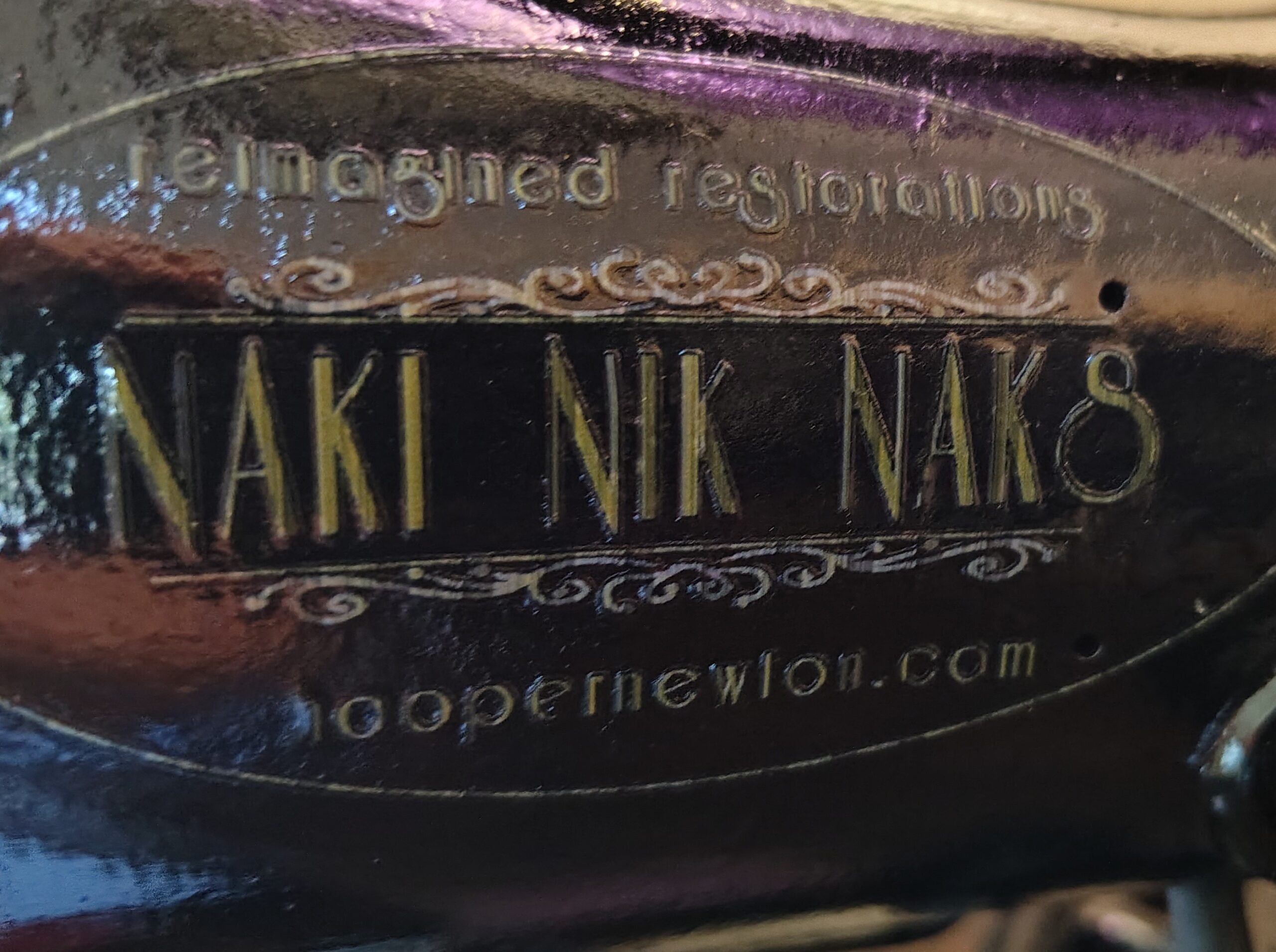
Naki Nik Naks

The process
Firstly we reimagined the cabinet into Phoenix. Then the actual machine faced a total strip down of everything to the smallest possible components. The hardest part was removing the cam (shaft running the length of the body internally) – thankfully Dr Google provided all the answers there.
The cast work we attacked with scrapers, metal brushes and soapy water before applying coats of CRC rust converter and primer, the existing decals and art work really were not salvageable sadly. Once back to metal it was a coat or three of black matt spray enamel covered with a few coats of clear acrylic once the decals and art work were applied. And the chrome parts restored to shiny by rubbing with scrunched up tin foil and white vinegar.
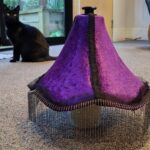 The lamp shade started life as an end of life wrecked shade rescued from an op shop. We hand sewed the velvet to the frame with lace and a metal trim to give it the finish we wanted.
For a final touch we added one of the machines internal gears to the top after giving it a tidy up, paint and clear coat.
The fixings to attach the shade to the machine were repurposed spring metal parts of one of the machines sewing feet / buttonhole attachments.
Wiring is soldered into place with heat shrink coverings, an earth strap attached to the body of the machine and electrically tested before use.